Jan 31

Ha, my title sounds like the beginning of a spam email. I’m actually even willing to have at least one FeedBlitz email that gets sent out to be caught in a spam filter, just to prove my point.

Either way, the title of this post looks ridiculous. And yet it is pervasive in headlines on the internet and in newsprint. Why? Because people are hungry for new ideas, new ways to try and make money and free energy (I guess those could all be classified under the money category). The reason these headlines are everywhere is because they work. They grab peoples’ attention, including my own.
But wait.

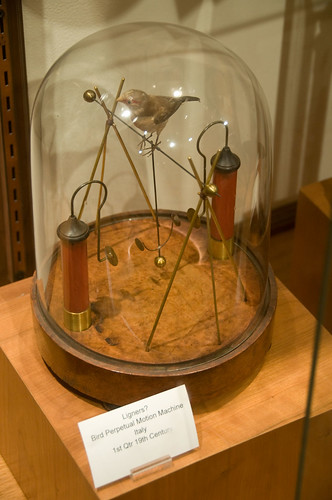
There are no breakthroughs, right?. There are, but they’re much more rare than the public is lead to believe. Even those breakthroughs aren’t even that big of a leap from the previous discovery. That’s just not how science works, people. Science is iterative. Science is boring. That’s the way science is designed to be. You think up a hypothesis, you test it, you repeat based on those results. Even if you do have some huge breakthrough, you really need to test it out rigorously to determine if it truly is a breakthrough.

Because of this realization, I’ve decided to create a simple guideline for the news media (who will ignore it, even if they ever saw it) and for aspiring pseudo-scientists, who are probably just people trying to sell the first “technology” they get their hands on.

Step 1: Ask yourself, “Has this been done before?”

I’m guessing that yes, you have asked yourself this; and no, it has not been done before. Why else would you be trying to report on it and/or sell it to people? If this has been done before, go back to the drawing board. No one wants to hear from you. (See, this is like science!)

Step 2: If this hasn’t been done before (and this technology you’re investigating seems like a breakthrough), ask yourself, WHY hasn’t this been done before?”

This is the step that people miss. Either when reporting on a technology or worse, trying to “create” a new technology, they ignore this step. For example, say you’ve figured out that you might be able to harness the motion of trees blowing in the wind. OK, why isn’t anyone doing it now? Have you considered the efficiency of the conversion process? Have you considered the economics of trying to harvest this energy? How long will the payback be for people that purchase such a system?

Step 3: If you believe you’ve overcome the 3 of the stumbling blocks of discovering new energy technologies (efficiency, money, ROI), what has changed?

Be specific. Saying that “it’s never been done before!” will be considered an incomplete answer and you will fail the test. If you are a reporter doing a story on an energy technology that will eventually be the next big thing, say exactly what has to happen and how soon it would have to happen in order for that technology to become viable. If you are “developing” that next big thing, tell us what you overcame and possibly how you overcame it; in the event you are not allowed to divulge that info because it is a trade secret, be prepared for future scrutiny and skepticism. Shrouding a problem does not solve it.

Step 4: Determine: Are you (or the people you’re reporting on) capable of delivering on a consistent basis all of the things that are promised?

Here are some examples of news stories or “inventions” I have heard about but that did not deliver:

  • A new chemical compound that can burn hotter and longer than fuel sources currently used but is extremely expensive to make (process). Since it was sold as a disruptive technology, this could not deliver because disruptive technologies must be economically feasible.
  • A new processing technique that is based upon ideal lab conditions and low volume manufacturing. Data was not based on a large sample size with many permutations of input variables so the promised (laboratory) conditions could not be delivered.
  • A microenergy harvester that was not capable of delivering because the efficiency of the converter was not calculated with realistin inputs and operating conditions. As such, the advertised output power could not be achieved.
  • A device based on permanent magnets that requires less energy put in than can be recovered. NOTE: This can never deliver as promised, see laws of conservation of energy and thermodynamics.

I’m not trying to say that people shouldn’t attempt to develop new technologies nor should they only do research on things that are immediately economically viable. That is short sighted and many past inventions would have never been achieved with that mindset. The people I’m reaching out to are the so called “reporters” out there and the so called “inventors”. Basically what I’m saying is that I too am hungry to hear about the next big thing. I look often and I find the same story each time. There was either a miscalculation or a misquote or a fancy-pants marketer trying to sell his big dumb ultra-capacitor that no one has seen to this day (p.s. it’s 2010. We’re still waiting!).

I know I’ve been guilty of it too, getting overzealous about under-developed new technologies. I’m a far cry from mainstream media though and I’ve yet to start “Gammell Energy Industries” to sell a ghost product. So if you’re a reporter/marketer/inventor/whatever, please be gentle with my hope for technologies that will help solve problems in the world. When you lie about a new product or technologies’ capabilities, it only dashes the hopes of others and removes focus from solving the problem at hand.
Go out and spread the word!
  • Digg
  • del.icio.us
  • Facebook
  • Google Bookmarks
  • Reddit
  • Technorati
  • Slashdot
  • StumbleUpon
  • LinkedIn
  • Print
Sep 01

I get it. Some of you out there don’t give a hoot about sustainability. I figured that out when people started unsubscribing from email subscriptions to my post feed. Sure, it could have been people switching over to an RSS feed reader, but it coincided with my posts about the Sustainable Cleveland 2019 summit (I may have gotten carried away with the writing).

For a while I was writing only about analog stuff, electrical engineering stuff and workplace stuff. To be honest, when the recession hit it was difficult to think of much else; when our security feels threatened (job, personal or otherwise), we revert to more basic creatures. It’s funny that we care most about the environment (the population as a whole) only when there is nothing  wrong with the economy. That is, if you don’t include gas prices; it seemed like we definitely felt threatened at $4 a gallon for unleaded. Anyway, I focused a little more on the electrical side of things whereas this site started out more on the renewable energy side of things.

And then I had the opportunity to attend the summit and it was really great. I met some awesome people and really got to see a side of Cleveland I never thought I’d see. It renewed my interest in renewable energy applications/technology and got me excited about the prospects of working on it in Cleveland. But I wasn’t completely satisfied with the summit. I found my experiences a few weeks later at a wind energy talk with Larry Viterna of the Great Lakes Energy Institute to be much more satisfying. Sitting and discussing the technical issues involved in a renewable energy system is much more appealing to me than going out in the community and rallying support for the idea (though I definitely understand the importance of doing so). I always feel that I am getting more done when I discuss the technical aspects of a project than the logistical aspects; it is not realistic to ever ignore one or the other, I just feel that I can contribute more to the technical side, due to my interest.

As a result of all of those experiences, I think I figured something out: I am much more interested in renewable energy and the technology behind it than the sustainability movement and working on how best to implement the methodologies. I completely agree with the concept of sustainability and try to lessen my personal impact by improving the energy efficiency of my house and changing my personal habits. However, I view sustainability as a management field whereas I view renewable energy as a technological field (a simplification I’m sure); right now, I am much more interested in technical matters than management matters.

As for the jumble of sustainability and renewable energy talk on this site and others, it’s important to realize they are different topics, yet intertwined. One cannot exist without the other: sustainable businesses require low cost, non-polluting power and renewable energy has greater demand when sustainable companies want a renewable source of power. As such, I plan to write only about the renewable energy topics, unless there are implications with sustainable business/life practices.

So while I do not plan on going out and knocking on the doors of businesses and homes to start pushing them to adopt sustainability practices, I do want to relay why I think they are important. Moreover, I want to point out the concepts I would embrace when I start my company (someday in the future). And even if I was completely detached from the business world, I feel that the benefits of adopting sustainability are relevant in my personal life and can have some serious implications for the future.

  1. It saves you money — The zero-waste concept is a powerful one; it also can save a ridiculous amount of money for you or your business if you properly plan an execute a plan of action. If you don’t have to pay for waste removal, don’t have to pay extra for unused raw materials and possibly even get paid for recycling some of your spent resources, you can save or net a significant amount of cash.
  2. It makes you less of a burden on the planet – This point doesn’t have any immediate benefits, but makes sense. Look all around you at every living thing: they all give back to their environment in some way. Humans aren’t great at matching this performance, but there is a movement to begin consuming less and being less of a burden on the planet.
  3. It’s not hard — Yes, you will have to watch your production processes and make sure you aren’t unnecessarily creating waste. Yes, you might have to pay a little bit more for clean energy from the electric company or have renewable energy capability installed at your facility/home. Yes, you will have to recycle instead of sending it to a landfill. But once the mindset is in place it becomes second nature.
  4. It saves you money — I can’t stress idea enough. Sustainable business practices make money. That’s why you see corporate giants like Walmart joining the party and delivering added value to their shareholders.

I plan to continue to focus on renewable energy research and applications, as it is where my greatest interests lie in the whole scope of the sustainability movement. I know there are many many more components that I will not be able to contribute to as a leader but will be able to adhere to as an ecologically concious citizen. What do you enjoy more? The renewable energy side of things, the sustainability side of things or none of the above? Let me know in the comments!

Go out and spread the word!
  • Digg
  • del.icio.us
  • Facebook
  • Google Bookmarks
  • Reddit
  • Technorati
  • Slashdot
  • StumbleUpon
  • LinkedIn
  • Print
Aug 21

Last evening I attended a talk from Dr. Larry Viterna, director of the Great Lakes Energy Institute (GLEI), titled “Wind Energy Technology and Its Adoption by Industry and the Public”. It was hosted by the Cleveland IEEE, the Case Student chapter of IEEE and the EECS department of Case and it was spectacular.

Let me tell you, even though I was excited from the energy in the room at Sustainable Cleveland 2019 summit last week, this event really topped it. Perhaps it was just my perception. I was trying to explain why this was a big deal to me to my girlfriend later in the evening and this is what I came up with:

Even though the Sustainable Cleveland 2019 summit was full of people with energy and great ideas, this was different. This was a group of people all in the same room that spoke the technical language, that knew or were involved in the research behind some of the technologies being discussed…and were still super excited about sitting there. It gave me hope when I had been previously disappointed that there weren’t more engineers at the summit.

Not only that, it was one of those events where the content was things you’ve never heard before because the person telling them to you discovered them. As an example, Dr. Viterna told us of an empirical method he devised while at NASA back in the late 70s/early 80s that empirically defined when a wind turbine would stall out. Prior to that point, estimations had all been based on a 2D model of the turbine blades; past a certain amount of power you cannot accurately predict when a fixed-blade turbine will stall. He presented at a conference but nothing came of it (his words were that he was laughed off stage, though I hardly believe that). It was only years later that he discovered his method was being used regularly in the explanation of how and when wind turbines would stall out; that data can then be used to control the power output of the turbine, especially useful in high wind situation (so it doesn’t bust into a million pieces). Where else would I find that kind of personal content in a talk?

While I could go on from my notes about the detailed talk that Dr. Viterna gave, I will instead bullet point some of my favorite facts and notes:

  1. Denmark decided in the early 80s to move towards a completely renewable energy situation (even after oil prices dropped) because they were importing up to 60% of their oil at the time and were particularly hard hit by the oil crisis of the late 70s. (Sounds familiar, doesn’t it?)
  2. The US just passed all other countries in terms of wind energy capacity. We also have a growth rate per year in wind energy capacity of 45% compared to a global average 25%.
  3. A wind turbine is equally effective with two blades or three as long as the same amount of area is swept by the blades; convention is currently 3 blades as pioneered by companies in Denmark.
  4. Power generated by a turbine is proportional to the area covered by the blades and also proportional to the cube of the velocity of the wind. So big blades are good, but big gusts of wind are better.
  5. The limiting factor of wind turbines currently is the drive train assembly and the stresses that are placed on it. The fluid dynamics (of the wind) around a turbine system and the extreme stresses it places on the turbine are beginning to limit the overall power that can be converted by a turbine without catastrophic failure (see video above).
  6. The first mulit-megawatt turbine was first pioneered in the late 70s into the early 80s by NASA. No turbine had been able to match the power output up until a few years ago.
  7. While wind energy could never compete on a cost basis with dirty coal (even with subsidies), the relative costs are close to the costs of new, regulated, “clean coal” plants (which don’t yet exist).

I was very lucky to be in that room with 50 or so other engineers last night to hear Dr. Viterna speak. I also had the opportunity to personally pitch the idea to him about the Laboratories for Advanced Energy Commercialization (LAEC or “Lake”); he indicated that something would need to be in place, though he didn’t mention whether LAEC would specifically be viable. He also mentioned that GLEI is still quite young and that there is a lot of development that needs to be done on the research side of things to really get money flowing through the region and bring in more research companies.

Cleveland, Case and the whole community is lucky to have Dr. Viterna heading up the GLEI. I belive his leadership and his passion for energy will really help drive development in the energy arena and help boost Cleveland to the forefront of the advanced energy research scene. Please leave any thoughts you might have in the comments, including other facts about wind energy or local research I may have missed.

Go out and spread the word!
  • Digg
  • del.icio.us
  • Facebook
  • Google Bookmarks
  • Reddit
  • Technorati
  • Slashdot
  • StumbleUpon
  • LinkedIn
  • Print
Aug 17

The last day.

It was pretty simple, really. Just collect your brainstormed ideas, distill them down into very few realistic ideas and then focus the best of those ideas into a final product. Once that is done, simply go up on stage and present in front of the 600 or so people that were attending. Simple… right? Right.

As you may remember from my explanation of Day 2 at the Sustainable Cleveland 2019 summit, I was in a group that focused on Advanced Energy Research. We were a group that had a much more diverse makeup than I had anticipated…I had expected only engineers in my quite limited sight. Instead we got a few engineers, a PR person, a patent lawyer, a stay-at-home mom, the head of financing at a non-profit, a start-up executive, a college student, a PR-person-turned-entrepreneur and a solar array installer. I couldn’t have made up that mix if I tried! But it was really great, the perspectives were unique and very much appreciated. Looking back at the roughly 6 hours of word we did, it’s amazing just how wide a breadth of ideas we covered and how we were able to reduce it to a final product.

So…what did we come up with?

Our group conceived an incubator of sorts, but with many more bells and whistles. Our focus was on the commercialization of technology, as that is probably the most difficult part in making a research concept into a tangible, sell-able product. As a starter name, we decided on “The Laboratories for Advanced Energy Commercialization” (LAEC…pronounced “LAKE”). Catchy, eh? I liked the name a lot. Anyway, the concept would be that eventually LAEC would become the center for all things advanced energy in Cleveland. The pinnacle of achievement would come when we constructed or rehabbed a building (LEED certified, of course) to serve as the center of advanced energy activity in Cleveland. This would include an “Energy Village”, where new technologies could be tested and showcased on model homes, in addition to subjecting it to the Cleveland elements. You think you have a great idea for a new solar panel? Well let’s see how it stands up to Cleveland’s cloudy days and great northern winters. Additionally, there would be a “PowerMart”, where now-commercialized technologies in their final form could be previewed and sold to municipalities and power companies from around the globe; this would help to showcase the region and bring outside investment to the area. Up to and past the point where a brick and mortar location for LAEC exists, the center would also act as a research resource and knowledge hub for all local and non-local researchers. Want to know which companies and Universities are researching or commercializing that new wind turbine technology? Check the LAEC databases or talk to a staff member we would hope to be able to hire. There would be maximum focus on being an independent, yet well connected and informed group that helps to bring all of the research and development firms in the area together around a common goal of increasing advanced energy knowledge.

There were many unanswered questions.

First off, funding. We really didn’t know where funding would come from for such a center. It’s possible that there are foundations out there that would be interested in sponsoring a center such as LAEC but never any guarantees. Other funding concerns would come later, if LAEC was ever truly established; how would the center be able to help to bring in funding for commercialization efforts that have always been so scarce in Cleveland in the first place? These are questions I am not sure the answer to.

If we take a further step back, another question remains: Doesn’t something like this already exist? Yes and no. There are many institutions that are serving the entrepreneurial crowd, some that serve the advanced energy crowd and some that serve the university crowd. However, we felt that there was not a central, all inclusive resource or institution that would allow for independent research and assistance in getting more money into the area for the commercialization of technology. Let’s be honest: Cleveland has many fine institutions that are capable of attracting funding and delivering worthwhile research. But while this does exist, the jobs are still not flooding the area as a result of any research breakthroughs. That is what LAEC would hope to deliver.

The summit left us on an interesting note. Our diverse team is now expected to go out and take action on a plan we set forth, including checkpoints at 3 weeks, 3 months and (1 to) 3 years. We are supposed to begin on our own but with some eventual guidance from the Mayor’s office at some point. As to when we will hear from them, I don’t know. What I do know is that I hear more about this summit and the resulting initiatives, I will continue to write about them here. If nothing ever comes of our ideas, I think there are other things that I could take away from the summit that will be equally, if not more, valuable than the plan for the LAEC.

So what did I really gain from the summit?

  1. Connections
    • The people I met at the summit was the first real glimpse I’ve had of the Cleveland working community outside of my company…and these were mostly non-engineering types. If nothing else, I learned that it is my duty to get out and begin networking better. Not for a better job or a higher salary, but because there are a lot of people out there with great ideas.
  2. Perspective
    • Similar to above, I never realized the passion of the people that are in the sustainability movement in Cleveland. There are multiple organizations that meet on a regular basis to discuss issues that are important to them and can truly affect the entire community. See some of the links below that I had just found out were locally run. Who knew there was so much interest in sustainability in a city that had a burning river 40 years ago?
    • More info
  3. Hope
    • It’s hard to explain the feelings most people have about Cleveland. It’s like the quirky second cousin you never tell your friends about. You still like your cousin, especially certain things about them…but you have very mixed feelings towards that cousin when others ask you about them. I have always toted the benefits of Cleveland to friends when I could, but I have felt it drag on me too…the negativity of others can be infectious, especially in the winter. But this summit gave me hope; it made me realize there are other people out there that see the potential and the great things that can be done in Cleveland. And that always feels good, no matter where you’re from. It was refreshing to be around that kind of excitement and I really hope that I get to be around something like it again soon.

So that’s all I have to say about the Sustainable Cleveland summit for now. I think there will be a continuing dialogue among my group, with the Mayor’s Office of Sustainability, with others from the conference and with outsiders that are not yet participating. If you have any kind of interest in participating in something like LAEC, please let me know, either by email, phone or in the comments. I think we can really make a difference for Cleveland and for progressing Advanced Energy technologies, but we need to work on it together.

(LEED certified, of course)
Go out and spread the word!
  • Digg
  • del.icio.us
  • Facebook
  • Google Bookmarks
  • Reddit
  • Technorati
  • Slashdot
  • StumbleUpon
  • LinkedIn
  • Print
Aug 13

I must say, I’m impressed. My questions from day one have almost all been answered in one way or another. A few things really caught my attention today, some of which I didn’t really expect.

To start we had Ray Anderson of Interface. If you would have asked me what the company was just from the name I would have immediately jumped to technology. However, that’s not the case; Ray is in the business of carpets…and has been for 30 years or so. He also took a pledge, both for himself and for his company about 15 years back. A pledge to reduce environmental impact and do no harm. And they have succeeded so far (I didn’t get the feeling they were planning on quitting anytime soon). Here’s some of their broad stroke statistics on how they have progressed over the past 15 years:

  • 76% reduction in waste since 1996
  • 74% less water used to produce the carpet tiles
  • 44% less total energy used in production
  • 60% less fossil fuels in production
  • 27% use of renewable energy for production worldwide
  • 100% use of renewable energy for production in Europe
  • 24% recyclable or bio-based materials.
  • $405 million saved due to these reductions since 1994

Ray went on to explain the importance on reducing the overall impact of the technosphere on the biosphere (his words). He maintained that if we continue using technology in the wasteful, disposable ways we currently are, the future looks bleak. However, if we bring technology on as a reducer of waste instead of a primary contributor, great progress can be made towards a very low usage, need-driven (as opposed to want-driven) society. If I had to sum up the wonderful presentation by Ray Anderson, it would be this: do no harm in business and you will succeed. The results he has produced with his company Interface are a great example of renewable, sustainable practices producing a better shareholder solution and a better company for customers and the environment.

From there, we went on to explore the next stage of the AI process, the “Dream” stage. I believe this was an important component, trying to postively visualize where we believed the city could end up and finding a creative way of expressing it. There were many bold dreams of a Cleveland of tomorrow mixed in with a many themes that resonated throughout the presentations (more on those themes later). Some were sillier than others, which I have first-hand experience with: I was the captain of the Best Times 2019 boat.

Once the creative fervor was scaled back a bit, we smoothly transitioned into the design phase. This was by far the most exciting part and really what I had been waiting for. It is the meat of any AI gathering; when stuff really begins to come together and progress is finally made. We first were reminded about good brainstorming concepts. Personally, the concepts and ideas presented on how to brainstorm reminded me that this entire process was a great example of a crowd-sourced kind of activity. Key among the concepts was the notion having a multitude of ideas, so many that your head would spin. The concept is that among a large large group of ideas, a few winners would rise to the top, along with some accompanying themes. From there the groups would be able to identify the favorite ideas, group other thematic elements and begin to focus intensely on the top ideas. Hopefully, they can all be implemented into a single prototype that would later be presented as a final product, at least as a tangible result of the design/brainstorming process. Dr. Cooperrider used Ideo, the design firm and prior client of his, as an example of rapid prototyping and idea generation. I had heard about them previously but plan on finding out more about the world-renowned design firm.

Before going further, I think it’s important to list of the top-level themes that were identified from the “Dream” stage implemented earlier in the day:

  • Advanced Energy Research
  • Advanced Energy Generation
  • Advanced Materials and Manufacturing
  • Communication Campaign and Branding of the final ideas of the summit
  • Engaging 1.6 Million People
  • Fostering Social Capital
  • Green Buildings
  • Health
  • Vacant Land Use
  • Local Foods
  • Maintaining Post Summit Momentum
  • Metrics of Success (for the summit)
  • Public Compact (or Manifesto if you will)
  • Social Entrepreneurialship
  • Strategic Partnerships and Learning
  • Sustainable Business Innovation
  • Transportation
  • Waste to Profit
  • Water
  • World Class Sustainability Education

As new visitors to the site might guess (given the graphic at the top of my site) , I chose the very first topic. As an engineer really interested in renewable energy (and how it can be implemented), I felt it necessary to talk about the research aspect, as opposed to the generation, of the energy. I feel the latter can be left up to others for a time when the energy is cheap enough to be widespread; until it has reached the tipping point of being more economical to use renewables over other forms of energy, the research will never really be done. Past that, once commercial interests begin using renewables on a regular basis, investing in efficiencies will be a self-sustaining activity and one that only adds to the new benefit of renewable energy technologies. I plan on saving the results from today’s brainstorming session for a post tomorrow or the day after, simply because of the length of this post and in order to report on our finished idea, as opposed to an undeveloped seed of an idea.

While day 2 of Sustainable Cleveland 2019 was effective (OK, and a little bit fun, I’ll admit), I think tomorrow will really decide the final outcome of the entire summit. Without concrete action plans, the whole thing is for naught. The fears that the summit is actually just another run-of-the-mill convention will or will not come to fruition. If instead we take action on the plans we have in place tomorrow and the next day and the day after, then we will truly be able to say we have achieved something. I look forward to experiencing and writing about tomorrow.

Go out and spread the word!
  • Digg
  • del.icio.us
  • Facebook
  • Google Bookmarks
  • Reddit
  • Technorati
  • Slashdot
  • StumbleUpon
  • LinkedIn
  • Print